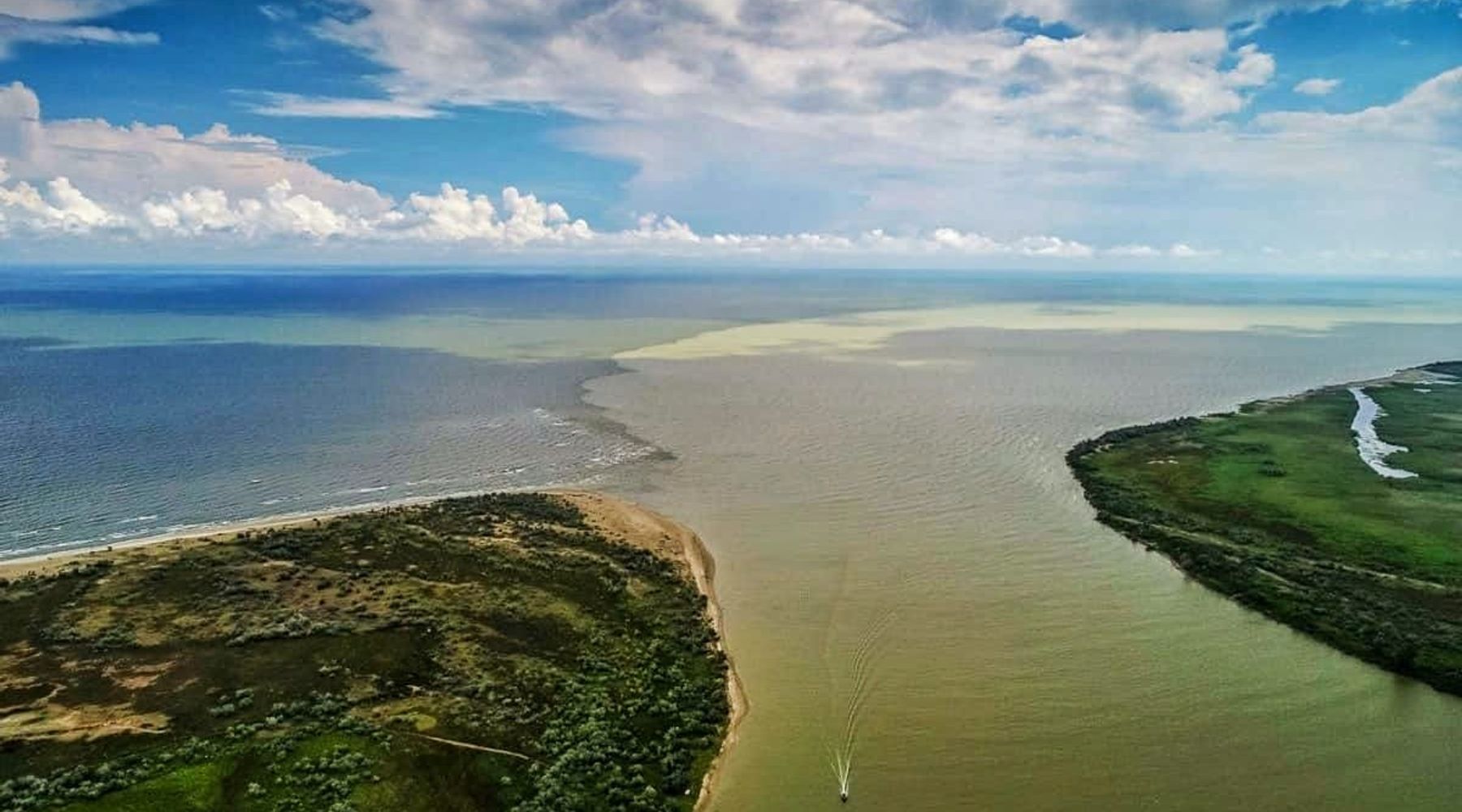
Dobrogea, Where the Danube Carries History to the Sea
Explore Dobrogea, Romania, where the Danube meets the Black Sea among ancient cities, wild landscapes and centuries of cultural heritage.
There is a moment, somewhere in Dobrogea, when the landscape seems to become larger than the map.
Perhaps it happens on a boat in the Danube Delta, with reeds closing behind you and pelicans lifting heavily from the water. Perhaps on the shore of Lake Sinoe, among the stones of ancient Histria. Or on a road through the dry hills of northern Dobrogea, where a ruined fortress suddenly appears above the horizon.
The scenery changes, yet the feeling remains: people have been travelling through this land for a very long time.
Set between the lower Danube and the Black Sea, Dobrogea, Romania has been inhabited, crossed and contested for thousands of years. Prehistoric communities, Greek sailors, Roman soldiers, Byzantine merchants and Ottoman travellers all left traces here. Later came communities whose traditions still shape the region: Romanians, Lipovan Russians, Turks, Tatars, Ukrainians and others.
Dobrogea is often described through its geography. To understand it, however, you have to follow its stories. And many of them begin with water:
Between a great river and an inland sea
Dobrogea occupies an extraordinary corner of Europe. The Danube approaches from the west after travelling almost 3,000 kilometres across the continent. Near its journey's end, it turns north and then east before dividing into the waterways of the Delta and finally disappearing into the Black Sea.
Between the river and coast lies a region of surprising contrasts: wetlands and steppe, lagoons and limestone, vineyards and old forests, fishing villages and archaeological ruins. For thousands of years, these landscapes formed natural routes between worlds.
The Danube connected Dobrogea with Central and Eastern Europe. The Black Sea opened passages towards the Balkans, Anatolia, the Caucasus and, beyond them, the Mediterranean. People followed both…
Some came to trade. Some built cities. Others arrived as soldiers, fishermen, farmers or refugees. Empires drew borders across the land and eventually disappeared. Communities remained.
It is this continuous movement that makes the history of Dobrogea so compelling. The region was never simply the edge of somewhere else. It was a meeting place.
Long before history had a name
The story begins thousands of years before the first Greek ship appeared on the horizon. Neolithic communities were already living around the lakes, rivers and Black Sea coast of Dobrogea during the sixth millennium BC. Among them was the Hamangia culture, remembered today for its pottery, burial customs and remarkable human figurines.
One small object has travelled particularly far through history. Known as the Thinker of Cernavodă, the clay figure sits with its head resting in its hands. Its companion figure sits nearby. Created several thousand years before classical Greece or imperial Rome, the Thinker feels strangely contemporary: quiet, absorbed, recognisably human.
There is something fitting about finding it here: Dobrogea has always invited contemplation. Its horizons are broad, its settlements often surrounded by enormous expanses of sky and water. Archaeology tells us that people were observing these landscapes, building communities and imagining their world here more than seven thousand years ago.
The civilizations that followed did not begin the story. They inherited it.
When Greek ships appeared on the Black Sea
By the 7th and 6th centuries BC, Greek sailors were navigating the western shores of the Black Sea and establishing colonies along the coast.
Histria, Tomis and Callatis became part of a network stretching far beyond Dobrogea. Through their ports moved ceramics, grain, wine, metals, coins and ideas. Greek settlers encountered the populations already living here, and the region entered a new era of exchange. Their cities have never completely vanished.
Tomis survives beneath modern Constanța, while Callatis lies beneath present-day Mangalia. Histria followed a different fate. The ancient city now stands in open country beside Lake Sinoe, far removed from the busy harbour it once possessed.
Visiting the ancient city of Histria is one of the rare experiences in which landscape and archaeology seem inseparable. There are walls, streets, temples, baths and traces of houses. Yet much of the atmosphere comes from what surrounds them: grass, wind, water and a horizon almost uninterrupted by modern buildings.
When Greek settlers founded Histria, the geography was different. The city stood beside a navigable Black Sea bay and prospered through maritime trade. Over centuries, sediment reshaped the coastline and gradually transformed the surrounding waters.
The sea moved away. The city declined. Today, the ruins remain beside Lake Sinoe, offering an extraordinary reminder that landscapes have histories too.
For travellers searching for historical places in Dobrogea, Histria deserves time rather than a hurried stop. Walk beyond the first ruins. Look towards the lake. It becomes easier to imagine why people chose this place more than two and a half millennia ago.
Ovid found the edge of Rome at Tomis
Another ancient story waits beneath the streets of Constanța. Tomis became part of the Roman world and, in AD 8, received an unwilling new resident: the poet Ovid (Publius Ovidius Naso).
Exiled from Rome by Emperor Augustus for reasons that remain partly mysterious, Ovid spent his final years beside the Black Sea. In his poetry from exile, Tomis appears distant, cold and impossibly far from the sophisticated capital he had lost.
For a modern traveller, the irony is irresistible. What Ovid experienced as the end of the civilized world was, in reality, a place where cultures had been meeting for centuries.
Today, Constanța carries those layers beneath a modern Black Sea city. Greek Tomis, Roman history, Ottoman heritage and the architecture of later centuries coexist within a destination that still looks towards the water. The sea that represented exile to Ovid is now one of the reasons travellers come.
Rome followed the Danube
If the Greeks looked towards the sea, Rome also watched the river. As Roman influence expanded, the lower Danube became a strategic imperial frontier. Fortresses, roads, military settlements and towns appeared along its banks, forming part of a defensive system that stretched across Europe.
Their remains still mark the landscape: Capidava Fortress stands above the Danube. Noviodunum developed near present-day Isaccea. Dinogetia occupied a strategic position near Garvăn. Other Roman and Byzantine sites appear across northern Dobrogea, sometimes in places that today feel remarkably quiet.
From high ground, the Danube stretches across the landscape like an enormous road. Boats travelling along it would have been visible from far away. Soldiers could watch the frontier; merchants could follow the river towards distant markets.
Two thousand years later, the same geography still determines how Dobrogea is experienced. Follow the river and history follows with you.
Empires passed, cultures remained
The archaeological map of Dobrogea can suggest a succession of civilizations: prehistoric, Greek, Roman, Byzantine, Ottoman. Human history is rarely so tidy…People mixed. Languages crossed borders. Recipes travelled. Religious traditions settled beside one another. Political boundaries changed while families continued with daily life.
Centuries of Ottoman presence added another profound layer to Dobrogea, while Romanian, Lipovan Russian, Turkish, Tatar, Ukrainian, Greek, Bulgarian and other communities contributed to the cultural character of the region.
You can still encounter that diversity today. It appears in village architecture, Orthodox churches and mosques, family names, festivals and kitchens. It can be heard in stories and tasted at the table.
The multicultural heritage of Dobrogea is therefore not confined to museums. It survives in everyday details. Food is one of its finest storytellers.
Around the Delta and its lagoons, fish naturally became central to local cooking. Lipovan traditions developed alongside Romanian recipes, while Turkish and Tatar communities brought flavours and dishes shaped by another cultural geography. Exploring traditional food in the Danube Delta is, in its own way, another journey through the region's history.
At Enisala, the whole landscape comes together
Few places explain Dobrogea as beautifully as Enisala. The medieval Enisala Fortress rises above the Razim-Sinoe lagoon complex, visible from far across the surrounding countryside. Climb towards its walls and the landscape opens dramatically.
Below lie villages, fields and vast stretches of water. Beyond them extends the territory connecting the Danube Delta with the Black Sea coast. The fortress was built here for precisely the reason visitors love the view today: location.
From this elevated point, routes across land and water could be observed and controlled. Trade, military strategy and geography converged on the same hill. Standing there now, you see more than a medieval ruin. You catch a glimpse of the soul of Dobrogea itself.”
Then the land dissolves into the Danube Delta
Travel north and eventually conventional geography begins to loosen. Roads end. Water takes over.
Before reaching the Black Sea, the Danube separates into the Chilia, Sulina and Sfântu Gheorghe branches. Around them spreads an intricate world of lakes, channels, reed beds, sandbanks, forests and marshes: the Danube Delta Biosphere Reserve.
Here, maps become less intuitive. A village that appears close may require a long journey by boat. A narrow channel can open unexpectedly into a broad lake. Reed walls hide entire landscapes until the boat passes through them.
The Delta is one of Europe's great wetlands and a UNESCO World Heritage property, internationally recognised for its biodiversity.
Yet it is also inhabited. The Danube Delta is not scenery separated from human life. Generations of fishermen and their families learned to live within a landscape governed by water levels, seasons, fish and weather.
Boats became everyday transport. Fish became food, livelihood and culinary tradition. Houses, gardens and villages developed their own relationship with the wetlands around them. To understand the Delta, you need both sides of the story: wilderness and human presence.
Birds write another map across the sky
Look upwards and Dobrogea acquires borders invisible to us. The wetlands sit along important migration routes and provide habitat for an extraordinary variety of birds. Pelicans have become the great symbols of the Delta, yet they share these waters with herons, egrets, cormorants, spoonbills, terns and many other resident and migratory species.
For anyone interested in birdwatching in the Danube Delta, the experience begins with learning to slow down. A boat engine falls quiet. Reeds move in the wind. Something crosses high above the water.Then the landscape starts revealing itself.
Early mornings can be particularly beautiful, when the light is low and the channels are still. Spring and autumn bring different migration movements, while summer transforms the wetlands into a vast green world.
Well-planned Danube Delta boat trips and guided Danube Delta excursions allow visitors to discover different habitats while navigating the protected area responsibly. In the Delta, travelling slowly is not a compromise. That is the point…
Letea is the Delta you do not expect
After hours among water and reeds, Letea Forest can feel almost impossible. The landscape changes to woodland and sandy terrain, shaped by old dunes and distinctive vegetation. The protected forest grows on the Letea sandbank, one of the fascinating environments created by the Delta's long interaction between river, sea, sediment and wind.
Nearby, Letea village adds another layer. Traditional houses and Lipovan heritage tell the human story of a community shaped by its relative isolation and close relationship with the Delta.
A trip to Letea therefore offers much more than a change of scenery. It reveals how varied the Delta becomes once you move beyond its familiar image of pelicans, reeds and open water.
Sulina waits at the end of the river
Few European towns occupy a position quite like Sulina. There is no conventional road bringing you here. You arrive by water, following the Danube towards the Black Sea.
Sulina grew through shipping and international commerce, particularly during the period when the European Commission of the Danube transformed navigation along this branch of the river. Greeks, Italians, British, Turks, Jews, Armenians and other communities contributed to the town's cosmopolitan history.
And then there is the beach…Walk east from town and the river landscape finally gives way to the Black Sea. After following the Danube through Europe, this is where its journey ends. For travellers, it can feel like an arrival. For the river, it is a farewell.
Sfântu Gheorghe lives where river and sea meet
Further south, Sfântu Gheorghe in the Danube Delta offers another encounter between the Danube and the Black Sea. The village sits near the mouth of the Sfântu Gheorghe branch, surrounded by wetlands and connected to a long, open beach.
Life here retains the scale of a Delta settlement. Boats remain part of everyday movement, fish is central to local cuisine, and the rhythm of the village changes with the seasons.
From here, travellers can explore nearby waterways, observe birdlife or simply walk towards the sea. It is difficult to imagine a more appropriate place to understand Dobrogea. River behind you. Sea ahead. Thousands of years of movement between them.
The Măcin Mountains tell an even older story
Dobrogea's human history stretches back millennia. Its rocks go considerably further. In the northwest rise the Măcin Mountains, the worn remnants of an ancient geological landscape. Their elevations are modest, yet their rocky ridges and open steppe scenery are unlike the forested mountain landscapes many visitors associate with Romania.
Walking here brings another change of scale. From wetlands and archaeological ruins, the journey suddenly enters geological time.
Măcin Mountains National Park protects habitats characteristic of northern Dobrogea and offers hiking routes through exposed ridges and wide landscapes. During spring, vegetation brings colour to the slopes; on clear days, the views stretch far across the surrounding plains.
A Dobrogea itinerary that combines the Măcin Mountains with the Delta demonstrates just how much variety is compressed into this corner of Romania.
Dobrogea at a glance
The region rewards travellers who resist the temptation to rush from one landmark to another. A few carefully chosen places can reveal several thousand years of history and remarkably different landscapes.
| Place | What makes it special | Experience |
|---|---|---|
| Danube Delta | Wetlands, channels, lakes and exceptional biodiversity | Boat trips, wildlife, photography |
| Tulcea | Traditional gateway to the Delta | Culture, museums, excursion departures |
| Letea Forest | Forest and dune landscapes within the Delta | Nature, village life, photography |
| Sulina | Historic Danube port at the Black Sea | Heritage, beach, slow travel |
| Sfântu Gheorghe | Village near the mouth of the Danube | Delta life, beach, boat excursions |
| Histria | Ancient Greek and Roman city beside Lake Sinoe | Archaeology, history |
| Enisala Fortress | Medieval fortress above the Razim-Sinoe landscape | History, panoramic views |
| Măcin Mountains | Ancient rocky landscape and steppe habitats | Hiking, nature |
| Constanța | Modern city built over ancient Tomis | Archaeology, museums, Black Sea |
| Mangalia | Modern town with the legacy of ancient Callatis | History, archaeology, coast |
Five days can tell a remarkable story
A rewarding Dobrogea travel itinerary could begin in Tulcea, where the terrestrial world gives way to the waterways of the Delta. Spend the following days exploring the Danube Delta by boat, choosing routes through lakes and narrow channels and allowing time for wildlife observation. Depending on your itinerary, continue towards Letea, Mila 23, Sulina or Sfântu Gheorghe.
Once back on the mainland, follow the lagoon landscape south towards Enisala and Histria. Here the journey changes character. Pelicans and reed beds give way to fortresses and ancient stones, yet water remains constantly present in the story.
Continue towards Constanța and the Black Sea and you will have crossed several thousand years of Dobrogea in only a few days.
Stay longer and the possibilities expand: hiking in Măcin, archaeological sites along the Danube, vineyards, villages, monasteries and the southern coast. Dobrogea is better approached as a region to explore, than a list to complete.
Every season reveals a different side of Dobrogea
There is no single best time to visit the Danube Delta because the landscape continually changes. Spring brings fresh vegetation and intense bird activity. Long summer days create generous conditions for exploring by boat and combining the Delta with the Black Sea coast. Autumn brings migration, softer light and another palette across the wetlands.
Even the hours of the day matter. Mornings on the water can be remarkably quiet. Towards sunset, temperatures soften, boats become fewer and birds return towards their resting areas.
Dobrogea is still a land of encounters
Civilizations have left their monuments across Dobrogea, yet its deeper history is about movement. The Danube moved people towards the sea. The Black Sea carried others towards its shores. Birds still cross invisible continental routes above the wetlands.
Communities continue traditions whose origins lie in different corners of Europe and Asia. Everything meets here. That may be the real reason Dobrogea feels so different from anywhere else in Romania.
Come for the Danube Delta, its pelicans and hidden waterways. Follow the river towards old fortresses. Walk through the ruins of Histria. Climb above the lagoons at Enisala. Listen to the stories of villages where cultures have lived side by side for generations.
And eventually, reach the Black Sea. With Danube Delta Travel, the journey through Dobrogea can begin where many of its stories have always begun: on the water.
FAQ-s
Where is Dobrogea?
Dobrogea lies between the lower Danube and the Black Sea. Romanian Dobrogea includes Tulcea and Constanța counties, while the historical geographical region continues into northeastern Bulgaria. Its position between river and sea has influenced its history, culture and landscapes for thousands of years.
Why is Dobrogea considered a crossroads of civilizations?
Its location placed Dobrogea on important river and maritime routes connecting Central and Eastern Europe with the Black Sea, Balkans and Mediterranean world. Prehistoric cultures, Greek colonies, Roman and Byzantine settlements and centuries of Ottoman influence all contributed to its historical heritage.
What are the essential places to visit in Dobrogea?
The Danube Delta, Histria, Enisala Fortress, Tulcea, Sulina, Sfântu Gheorghe, Letea Forest, the Măcin Mountains, Constanța and Mangalia reveal different sides of the region. A longer journey can also include Roman and Byzantine archaeological sites along the Danube.
Is the Danube Delta in Dobrogea?
Yes. The Romanian Danube Delta occupies the northern part of Dobrogea, where the river separates into its principal branches before reaching the Black Sea.
How many days should I spend in Dobrogea?
Five to seven days allow travellers to combine a Danube Delta holiday with several archaeological and cultural destinations. For a journey focused primarily on the Delta, spending at least three days gives you more time to explore different habitats and waterways without rushing.
When is a good time to visit the Danube Delta?
Spring is particularly rewarding for birdlife and fresh landscapes, while summer offers long days and works well for combining the Delta with the Black Sea coast. Autumn is fascinating during bird migration and often brings beautiful conditions for photography.
Can I explore the Danube Delta independently?
Some towns and villages can be reached using public boat services, while many lakes, narrow channels and wildlife areas require suitable local transport and knowledge of permitted navigation routes. Guided Danube Delta tours are a practical option for visitors who want to explore different habitats and understand what they are seeing.
What birds can I see in the Danube Delta?
The species vary according to season and habitat. Pelicans are among the Delta's emblematic birds, alongside herons, egrets, cormorants, spoonbills, terns and numerous migratory species. A dedicated Danube Delta birdwatching tour can focus on suitable habitats according to the time of year.
Can Dobrogea be combined with a Black Sea holiday?
Very easily. The region extends from the Danube Delta to Romania's Black Sea coast, making it possible to combine wetlands, archaeological sites and seaside destinations within the same journey. Sulina and Sfântu Gheorghe offer the particularly unusual experience of encountering the Black Sea directly from the Delta.
What makes Dobrogea different from other regions of Romania?
Its combination of geography, biodiversity and cultural history is distinctive. Within a relatively compact region, travellers can explore the Danube Delta, ancient Greek cities, Roman fortresses, medieval ruins, old mountains, Black Sea beaches and villages shaped by Romanian, Lipovan Russian, Turkish, Tatar and other traditions.
Is Dobrogea worth visiting beyond the Danube Delta?
Absolutely. The Delta may be its internationally famous landscape, yet Dobrogea extends far beyond the wetlands. Histria, Enisala, the Măcin Mountains, ancient sites along the Danube, Constanța and the lagoon landscapes make the wider region worth exploring as a journey in its own right.